
Male infertility

Male Infertility Specialist in Jalandhar – Dr. Rajesh Aggarwal | Sarvodya Hospital
Male Infertility

Infertility affects up to 15% of couples, and in nearly half of these cases, a male factor is involved. At Sarvodya Hospital, under Dr. Rajesh Aggarwal, we understand how emotionally challenging infertility can be — and we’re here to help. As a fellowship-trained urologist specializing in male reproductive health, Dr. Rajesh Aggarwal offers advanced diagnostics and effective treatment options for male infertility.
What Is Male Infertility?

Male infertility refers to a man’s inability to cause pregnancy in a fertile female partner after 12 months of regular, unprotected intercourse. It can stem from issues with sperm production, sperm function, or sperm delivery.

Common Causes of Male Infertility

There are many potential causes of male infertility, including:

  • Hormonal Imbalances: Low testosterone or other hormonal disorders affecting sperm production.
  • Varicocele: An enlarged vein in the scrotum that can overheat the testicle and impair sperm production and quality.
  • Obstruction: Blockages in the reproductive tract (such as the vas deferens or epididymis) preventing sperm from being ejaculated.
  • Genetic Conditions: Klinefelter syndrome, Y chromosome microdeletions, or other chromosomal abnormalities.
  • Ejaculatory Disorders:Retrograde ejaculation or issues with semen expulsion.
  • Infections: Infections such as prostatitis, epididymitis, or STIs that affect sperm health.
  • Lifestyle & Environmental Factors: Smoking, excessive alcohol, drug use, obesity, heat exposure, or occupational hazards (e.g., radiation, toxins).
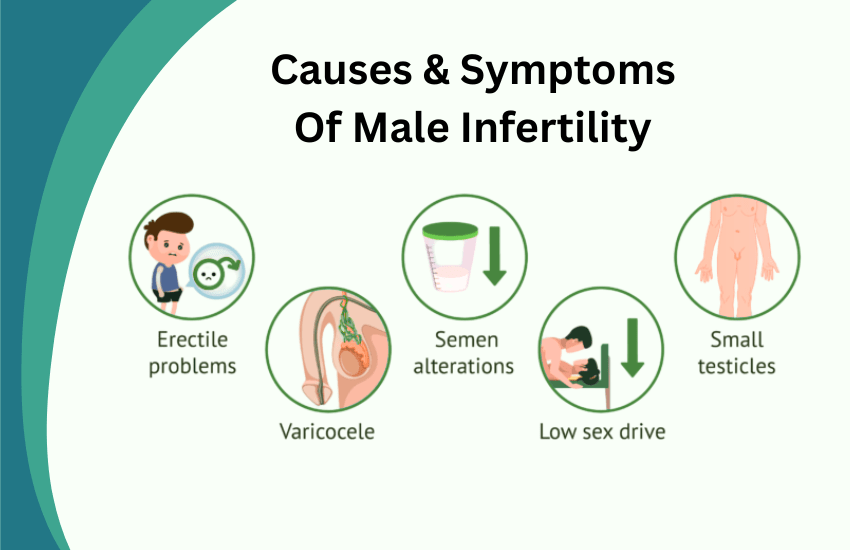
Symptoms of Male Infertility:

Often, male infertility has no obvious symptoms aside from the inability to conceive. However, some men may experience:

  • Low sex drive
  • Erectile dysfunction
  • Pain or swelling in the testicles
  • Decreased facial or body hair
  • Small or firm testicles
 Diagnosis: What to Expect

At your consultation, we take a thorough medical and reproductive history, followed by a physical exam and appropriate testing, which may include:

  • Semen analysis – Evaluates sperm count, motility, morphology, and volume
  • Hormone testing – Including testosterone, LH, FSH, and prolactin
  • Scrotal ultrasound – To check for varicocele or structural issues
  • Genetic testing – When indicated
  • Post-ejaculate urinalysis – To assess for retrograde ejaculation
  • Advanced sperm function tests – If needed

Our approach is comprehensive and confidential, with a focus on identifying the root cause of infertility.

Treatment:

Treatment depends on the underlying cause and may include:

  1. Lifestyle Modifications
  • Weight loss, smoking cessation, stress reduction, limiting heat exposure (e.g., hot tubs, laptops)
  1. Medical Therapies
  • Hormonal treatments
  • Antibiotics for infections
  • Antioxidants to improve sperm quality
  1. Surgical Treatments
  • Varicocele repair (varicocelectomy)
  • Vasovasostomy or epididymovasostomy for obstructive azoospermia
  • Sperm retrieval procedures (TESA, PESA, MESA, or micro-TESE) for use with IVF/ICSI
  1. Assisted Reproductive Technologies (ART)
  • Working closely with fertility specialists to assist with intrauterine insemination (IUI) or in vitro fertilization (IVF) with or without ICSI (intracytoplasmic sperm injection)